
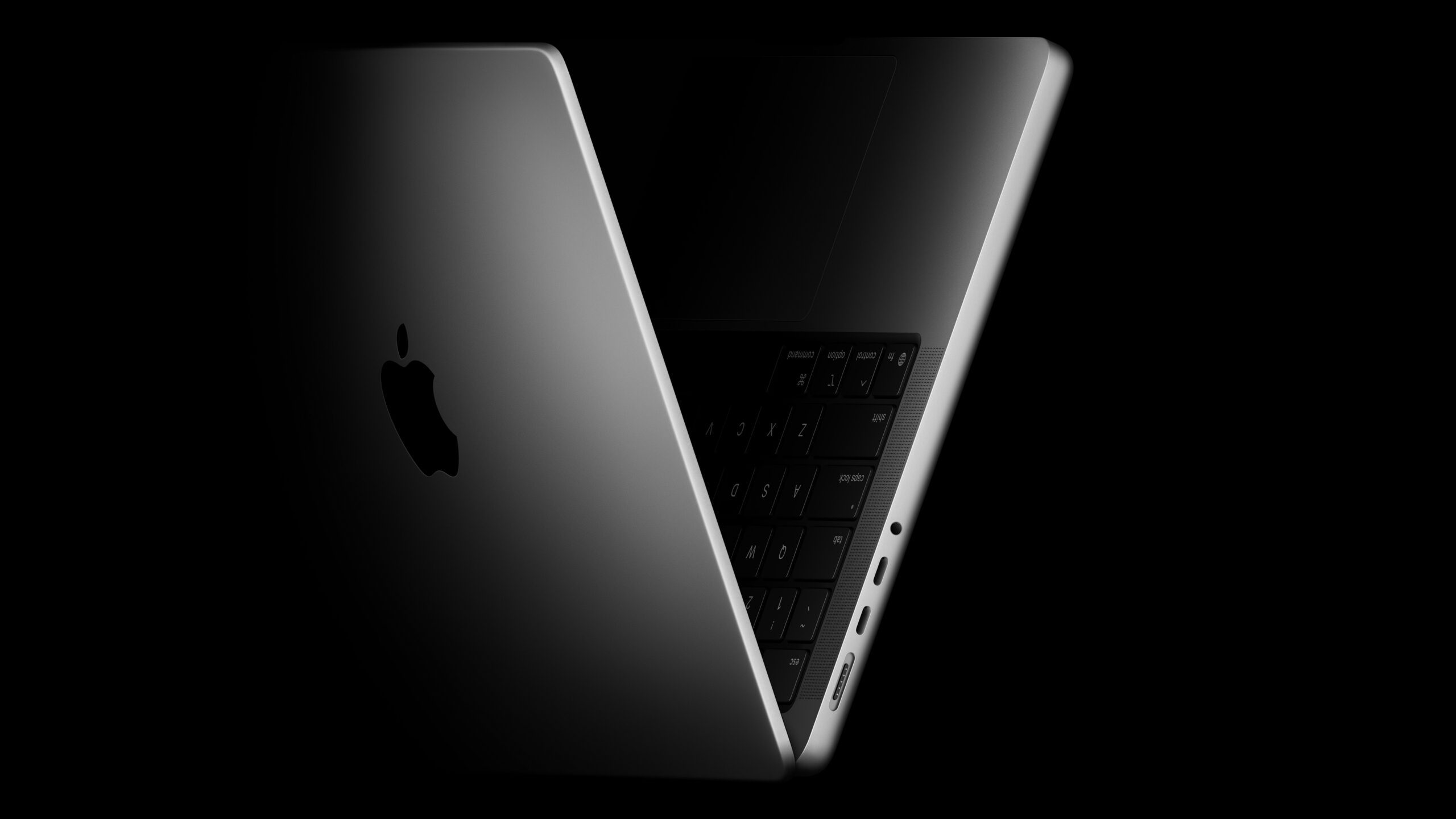
A lighter MacBook Pro is coming, and apparently it’s not a minor tweak. Bloomberg’s Mark Gurman wrote in his Power On newsletter today that Apple’s upcoming redesign, expected within the next month or so, will be “significantly” lighter than the current lineup, on top of everything else already rumored.
That everything else is a lot. This generation brings a touchscreen to MacBook for the first time ever, Tandem OLED displays, and reportedly a Dynamic Island borrowed from the iPhone. Most of that’s been circulating for months now. The weight detail is new, and arguably more interesting than people are giving it credit for, since specs on a page don’t tell you what a laptop actually feels like in a bag.
Numbers help put this in perspective. The current 16-inch MacBook Pro sits at 4.8 pounds. The 15-inch MacBook Air, by comparison, comes in at 3.3 pounds, a gap most people would notice immediately when picking either one up. Gurman didn’t give an exact figure for how much Apple is shaving off, but the framing in his newsletter suggests this won’t be a token reduction, more like a real rethink of what’s inside.
Apparently Apple went after the internals directly. Components got miniaturized, things got rearranged, and the end result is supposedly a machine that carries noticeably easier than what’s currently on shelves. Anyone who’s lugged a 16-inch Pro through an airport knows exactly the problem Apple seems to be addressing here.
Chip-wise, there’s a twist worth mentioning. These new machines are expected to launch with the existing M5 Pro and M5 Max, not the next-generation M6 chips some assumed would arrive alongside a redesign this major. Apple is reportedly skipping the higher tier of M6 entirely, choosing instead to push resources toward getting M7 out faster. Whether that disappoints buyers hoping for the latest silicon alongside new hardware remains to be seen.
Software changes are coming too. Gurman mentions macOS Golden Gate will need updates to properly support touch input and the Dynamic Island, arriving around the same time as macOS 27.2. Given that touch has never been part of the Mac experience before, how deeply macOS adapts to it will matter just as much as the hardware itself.
If the timeline holds, all of this becomes official sometime before the end of November.
Comments
Comments will load as you approach this section.